Wesley Ira Purkey was pronounced ᴅᴇᴀᴅ at 8:19 a. m. on July 16, 2020, inside the federal execution chamber at USP Terre Haute, Indiana, ending a 17-year legal battle that 𝓮𝔁𝓹𝓸𝓼𝓮𝓭 a chilling tale of deception, brutal violence, and a justice system’s agonizing reckoning with second chances.
The 68-year-old inmate, who once convinced a parole board he had reformed, became the second federal inmate executed in nearly two decades after a Supreme Court ruling cleared the way just hours earlier.
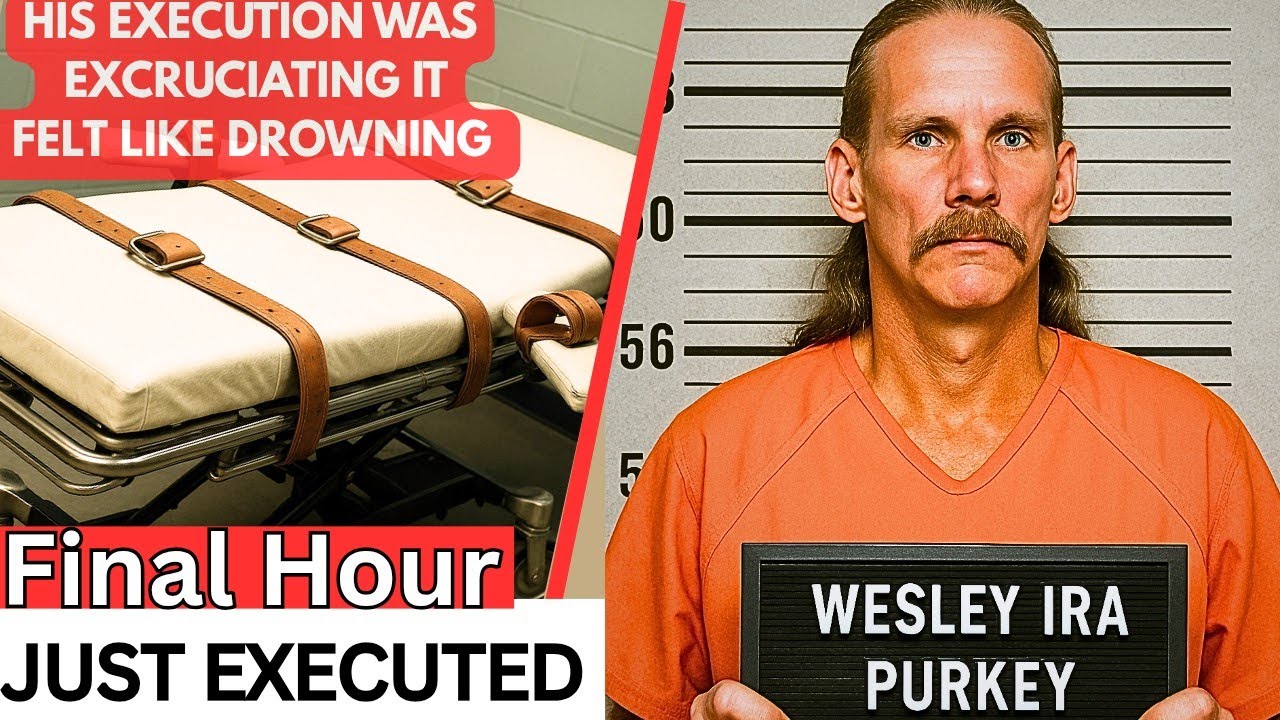 Purkey’s final meal consisted of fried fish and onion rings, a simple order that belied the horror of his crimes. In his last words, he apologized to the families of his victims, saying, “I deeply regret the pain I caused.” But for William and Olivia Long, the father and stepmother of 16-year-old Jennifer Long, the execution brought no closure.
They traveled from Kansas City to witness the moment, saying it was important to be there, even as they acknowledged the man who murdered their daughter had changed behind bars only to betray every chance at redemption.
The story of Wesley Ira Purkey begins in Lansing, Kansas, a small town shadowed by prison walls. Born on January 6, 1952, into a home marked by dysfunction, his mother struggled with alcohol addiction, and his father’s violent temper left scars. Purkey suffered multiple head injuries and was diagnosed with schizophrenia, depression, and antisocial disorder before adulthood.
By age six, he drank alcohol; by 11, he sniffed glue. Teachers called him disruptive. He was expelled multiple times and arrested before high school, eventually sent to a juvenile detention facility that he claimed added trauma to his fractured youth.
His first serious conviction came in 1970 at age 18 for burglary. Parole followed, but he violated terms and returned to prison. In 1980, he was released again.
Within weeks, Purkey and a friend robbed a man at gunpoint in Wichita, Kansas, then sH๏τ him twice in the head. The victim survived, left partially disabled, and identified his attacker. Purkey received 15 years to life for aggravated battery, kidnapping, and robbery.
Behind bars, he was described as violent and manipulative, stabbed twice, but by 1986, a shift occurred. He earned an ᴀssociate degree in literature, joined Alcoholics Anonymous, and completed substance 𝓪𝓫𝓾𝓼𝓮 counseling.
In 1992, a team of prison psychologists conducted a deep evaluation. Their conclusion was chilling: Purkey was a classic psychopath, lacking empathy, remorse, or responsibility, but highly intelligent, traits that could help him hide his true nature. Yet, by 1996, a different counselor painted a hopeful picture, calling him rehabilitated.
 The Kansas parole board reviewed his case in early 1997, receiving dozens of letters from friends, family, and even correctional staff arguing he had matured. Prosecutors, law enforcement, and his shooting victim strongly objected, but the board voted to release him. In March 1997, Purkey walked free after 17 years.
Less than a year later, the lie unraveled. On January 22, 1998, Purkey drove from Lansing to Kansas City for a plumbing job interview. Afterward, he smoked crack cocaine and cruised the streets in his white Ford pickup.
He spotted 16-year-old Jennifer Long walking alone, offered her a ride, then drove her across state lines to his home in Lansing. In the basement, he Sєxually ᴀssaulted her, then stabbed her multiple times in the chest, face, and neck when she tried to escape. He placed her body in a metal toolbox, later dismembered it with an electric chainsaw, burned the remains in his fireplace, crushed the bones, and disposed of the ashes in a septic pond.
While Jennifer’s mother desperately searched, Purkey returned to his life. On October 26, 1998, he was dispatched to fix a kitchen faucet at the home of 80-year-old Mary Ruth Bales, a widow who had survived polio and walked with a cane. Purkey demanded payment upfront, then left with the cash to hire a 𝒔𝒆𝒙 worker and buy crack cocaine.
The next morning, he returned, carrying a claw hammer, and bludgeoned Mary to death in her bedroom. After killing her, he and the woman stayed for hours, smoking drugs and eating from her refrigerator. Two days later, he returned with gasoline to burn the house, but neighbors called police.
Mary’s body was discovered, and Purkey was arrested on October 30, 1998.
Mary’s family later filed a lawsuit against Ready Roto, the plumbing company that employed Purkey, for failing to conduct a background check. The company settled for $500,000. By then, Purkey faced a life sentence in state prison for Mary’s murder.
 But behind bars, he devised a plan. On December 15, 1998, he wrote a letter to a Kansas detective claiming to have information about an unsolved kidnapping and murder, requesting an FBI agent. His goal: confess to a federal crime to secure a safer federal sentence, avoiding enemies in the Kansas prison system.
He provided a full confession, led authorities to the septic pond where Jennifer Long’s remains had been disposed, and pointed to her pH๏τo without hesitation.
In March 2000, Purkey pleaded guilty to first-degree murder and aggravated robbery for killing Mary Bales, receiving life with no parole for 32 years. He told the court, “Words cannot express my remorse.” Mary’s grandson called it a sob story.
Then, on October 10, 2001, federal prosecutors filed charges for kidnapping a child resulting in death, a capital offense. Purkey tried to retract his confession, claiming he fabricated the kidnapping to manipulate the system, but it was too late. His trial began in October 2003.
The jury convicted him on November 5, 2003, and after hearing evidence of his white supremacist tattoos and past violent acts, recommended death. On January 23, 2004, Purkey was formally sentenced to death and transferred to federal death row in Terre Haute.
For years, federal executions were on hold. But in July 2019, the Justice Department announced their resumption. Purkey was one of five inmates selected, with an execution date set for December 13, 2019.
Legal challenges followed, blocking it over concerns about the lethal 𝒹𝓇𝓊𝑔 pentobarbital. The stay was lifted in April 2020, setting a new date of July 15, 2020. That morning, a federal judge granted another delay based on claims that Purkey had developed dementia, suffering from Alzheimer’s disease and no longer competent to be executed.
 The Justice Department appealed. Just after midnight on July 16, the Supreme Court, in a 5-4 decision, ruled the execution could proceed.
Hours later, Purkey was escorted into the execution chamber. His last words included an apology to Jennifer Long’s family and his own. At 8:19 a.
m. , he was pronounced ᴅᴇᴀᴅ. But the controversy did not end there.
After the execution, Purkey’s family authorized an autopsy. Dr. Joyce deJong of Western Michigan University performed it, revealing severe acute pulmonary edema, a rapid fluid buildup in the lungs.
Forensic expert Dr. Gail Van Norman reviewed the findings and concluded Purkey may have experienced flash pulmonary edema while still conscious, a sensation described as drowning from the inside, one of the most intense forms of human suffering. Federal prosecutors disagreed, stating his death was quick and painless.
The debate over Purkey’s execution echoes the larger national conversation about mental illness, the death penalty, and whether some people are truly capable of change. His case stands as a stark reminder of a man who fooled the system, took two innocent lives, and forced society to confront the ᴅᴇᴀᴅly price of second chances. For the Long and Bales families, the pain remains.
William Long, Jennifer’s father, said the execution would not bring closure, but it was important to witness the end of a story that began with a vulnerable girl walking alone and ended with a federal execution that raised haunting questions about hidden suffering behind the curtain of justice.