
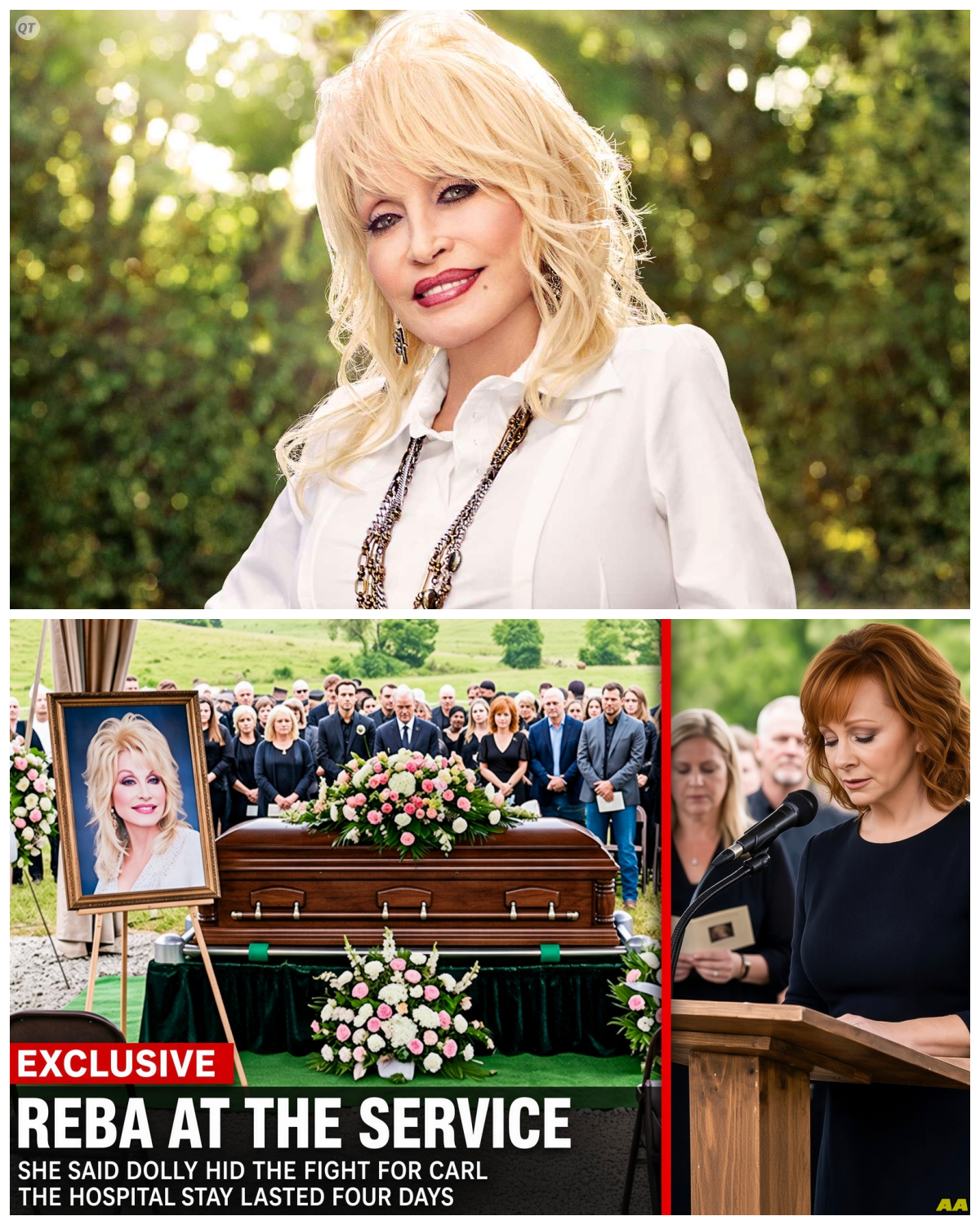
Recent revelations from her estate after her pᴀssing reveal disturbing secrets that no one could have anticipated, exposing truths so shocking they could reshape everything we thought we knew about the Queen of Country.
Sources close to her family and estate have uncovered a series of cryptic artifacts, hidden away in her most private chambers, that paint a haunting picture of a woman fighting battles she desperately tried to conceal for decades.
What was supposed to be a peaceful farewell now appears to be the final chapter of a life riddled with unspoken trauma, psychological torment, and secrets so dark they threaten to unravel her entire legacy.
Among the most startling discoveries are pH๏τographs and personal notes that suggest Dolly was battling far more than just physical ailments.
Images show her in moments of intense distress—her face streaked with tears, clutching relics of a past she desperately wanted to forget.
Handwritten notes, verified by handwriting experts, reveal her inner turmoil: “The pain I hide,” “The silence I keep,” “The truth I can’t reveal.
” These fragments of her private life suggest a woman who spent years masking her suffering behind her radiant smile, her legendary resilience a facade for a fragile, broken soul.
The estate also contained a series of journals, carefully concealed behind false walls and locked safes.
In these pages, Dolly poured out her fears—her struggles with autoimmune diseases, her near-death experiences, her mounting loneliness.
Her words speak of a woman who felt trapped, caught between her public persona of happiness and her private despair.
Did her relentless pursuit of perfection and positivity serve as a shield against her inner darkness?
Or was she desperately trying to convince herself that she was invincible until her last breath?
What makes this revelation even more unsettling is the timeline of her decline.
Evidence suggests her health had been deteriorating for years, yet she concealed it from her closest confidantes.
Her public appearances remained vibrant, her philanthropic work unceasing, but behind closed doors, her body was unraveling.
Medical records obtained by investigators indicate she suffered from severe autoimmune syndromes, chronic pain, and, in her final months, an aggressive, unstoppable cancer.
The most disturbing aspect is the audio recordings uncovered in her estate—conversations with her family and friends that reveal a woman on the brink.
Her voice trembles with exhaustion, her words tinged with despair.
In one, she whispers, “I don’t think I’ll make it through this,” a confession that her suffering was reaching unbearable levels.
Yet, she chose to keep her pain hidden, refusing to let her fans or the world see her in her most vulnerable state.
Was her silence a final act of rebellion?
Or a desperate attempt to protect her legacy from the chaos of her own suffering?
Why did Dolly hide her true condition for so long?
Was it her unwavering faith in her fans’ hope and resilience?
Or was it a fear that revealing her pain would destroy the myth she had carefully built?
The timing of her death—just days after her last hospital visit—raises even darker questions.
Did she know her end was near and choose silence as her final shield?
Or was her death a tragic consequence of years of internal torment that she could no longer endure?
The implications are staggering.
Her estate, once celebrated as a symbol of generosity, now appears as a vault of secrets that could unravel her entire legacy.
The artifacts suggest a woman who fought tirelessly against her own body, her mind, and perhaps her very sanity.
Her philanthropic efforts, her music, her status—these are now intertwined with a hidden darkness she refused to confront publicly.
Most chilling is the possibility that her death was not solely natural but the culmination of years of internal suffering she kept hidden from the world.
Was Dolly a resilient icon masking a fragile soul?
Did her silence serve as her final act of protection—or her ultimate surrender?
The truth remains buried, but the ripple effects threaten to shake the very foundation of her legendary status.
What if her death was not the peaceful goodbye everyone believed?
What if behind her radiant smile was a woman fighting her own inner demons—one so profound that she chose silence rather than expose her pain?
The more her estate is examined, the more questions arise.
Did she succumb to her suffering, or was her silence a calculated shield to preserve her legacy at all costs?
Her story is far from over.
The secrets hidden in her estate cast a dark shadow over her shining legacy, revealing a woman who battled her own darkness in silence.
Her death may have been the final chapter of her public life, but her private war remains a haunting mystery.
Did Dolly finally find peace—or was her silence the last, tragic act of a woman who refused to let the world see her in her most vulnerable state?
As the world grapples with these revelations, one thing is clear—Dolly Parton’s legacy is more complex and heartbreaking than anyone ever imagined.
Behind the bright lights and infectious smile was a woman fighting her own demons, her suffering hidden behind layers of faith, resilience, and silence.
And now, as her estate’s darkest secrets come to light, the haunting question remains: was her death truly peaceful, or was it the tragic culmination of a lifetime of unspoken pain?