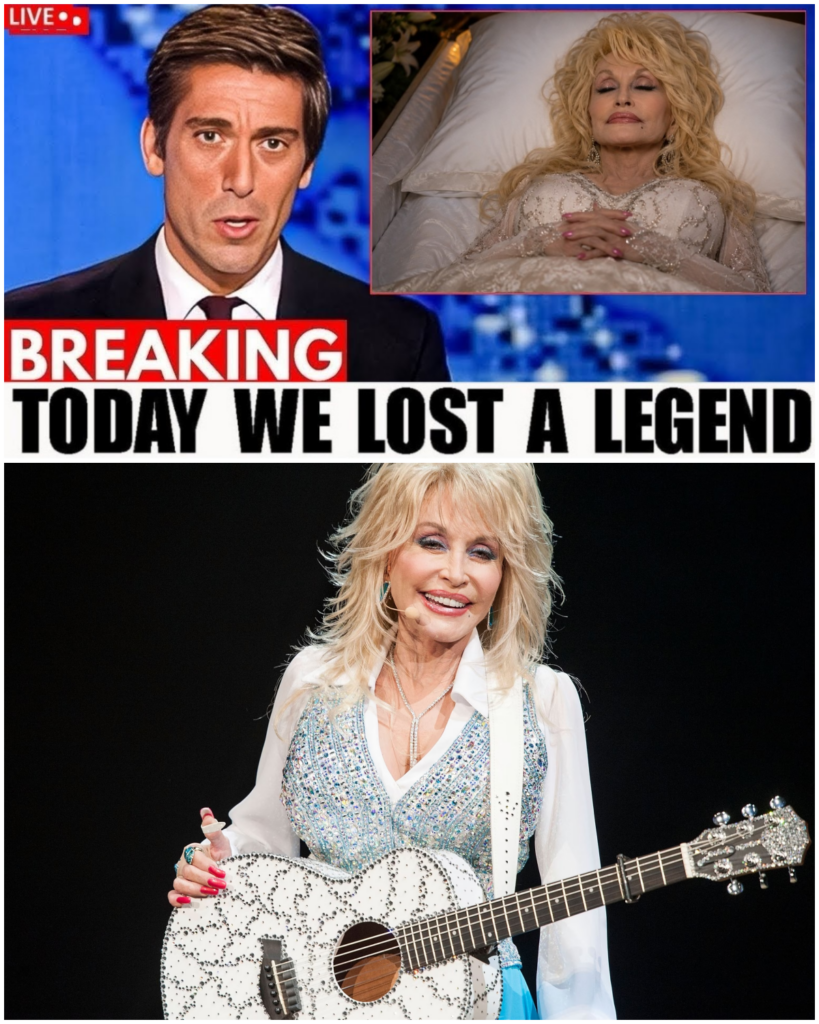
Dolly Parton died on August 25, 2026, in Nashville, at the age of 80, following what her representatives described as a brief battle with cancer.
Her nephew, Bryan Seaver — who has served as her head of security, a role his father Larry held before him — confirmed her death in a video statement posted to her official accounts, calling it something she had asked him, years earlier, to be the one to share.
Her death came just months after the loss of her husband, Carl Dean, who died in March 2025 at 82, following 58 years of marriage.
Parton had spoken candidly in the months since about how much that loss had taken out of her.
Speaking at Dollywood in March 2026, she admitted she’d been “worn down and worn out” from grief and from health setbacks that had forced her to postpone a planned Las Vegas residency.
By mid-August, she’d canceled additional appearances, citing dehydration and dizziness, joking on social media at one point that she “ain’t ᴅᴇᴀᴅ yet.”
Just days before her death, she told fans in a video message that she was “dealing with some health issues” she hadn’t paid close enough attention to while caring for Carl in his final months.
To understand what made her death resonate so widely, you have to go back to where she started.
Dolly Rebecca Parton was born January 19, 1946, in a one-room cabin on Locust Ridge in Sevier County, Tennessee, the fourth of twelve children.
Her father, Robert Lee Parton, was a farmer who signed his name with an X.
Her mother, Avie Lee, raised the family through genuine poverty — the kind Parton would later turn into one of her most famous songs, “Coat of Many Colors,” about a coat her mother sтιтched from rags while telling her the story of Joseph from the Bible.
She was performing in church by six, on Knoxville radio by ten, and had recorded her first single by thirteen.
The day after graduating high school in 1964 — the first in her family to earn a diploma — she left for Nashville.
The years that followed were a slow, deliberate education in an industry not built to reward people like her.
She joined The Porter Wagoner Show in 1967, gaining national recognition, and began constructing the image the world would come to know — the wigs, the rhinestones, the exaggerated glamour she famously described by saying it took “a lot of money to look this cheap.”
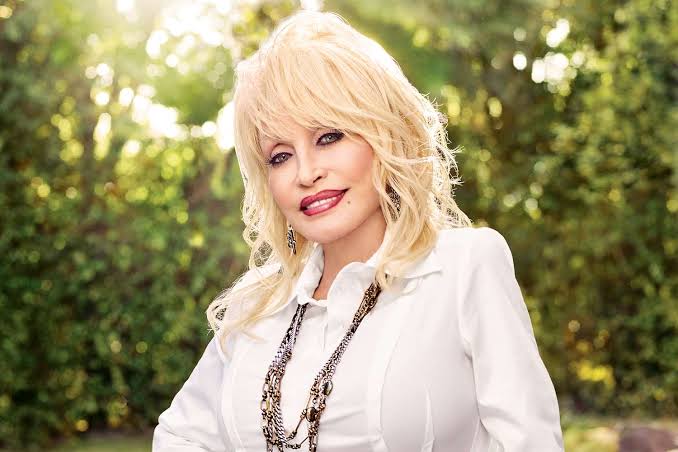
It was never vanity. It was armor, and it was calculated.
Underneath it was one of the most prolific songwriting careers in American music, spanning more than three decades of ownership over her own catalog — a rarity in an industry built on separating artists from what they create.
She wrote “I Will Always Love You” in the mid-1970s as a farewell to Porter Wagoner, and the song became one of the most significant ᴀssets in country music history: a number-one country hit in both 1974 and 1982, and, in 1992, the foundation of Whitney Houston’s era-defining recording for The Bodyguard — a version that became the best-selling single ever released by a female artiSt.
Because Parton had retained full ownership of the song, every copy sold generated royalties that flowed directly to her, reportedly worth tens of millions of dollars from that recording alone.
That instinct — to own everything she made, no matter who came asking — defined her business career as much as her music.
Her publishing catalog, encompᴀssing more than 3,000 songs including “Jolene,” “9 to 5,” and “Coat of Many Colors,” has been valued in the hundreds of millions of dollars.
Combined with her stake in Dollywood, the theme park she built in Pigeon Forge near her childhood home, real estate holdings, film and television work — including an Oscar-nominated turn writing the 9 to 5 soundtrack — and decades of brand licensing, estimates of her net worth at the time of her death ranged from roughly $450 million to $650 million, depending on the source.
Just as central to her legacy was her philanthropy.
In 1995, she founded the Imagination Library, a program that mails a free book each month to enrolled children from birth to age five.
By the time of her death, it had distributed hundreds of millions of books across multiple countries.
In 2020, she donated $1 million to Vanderbilt University Medical Center for COVID-19 vaccine research, funding that contributed to the development of the Moderna vaccine — support she asked not be publicized for personal credit, hoping instead to encourage other donors to follow.
In 2022, Jeff Bezos awarded her $100 million through his Courage and Civility Award, much of which she redirected toward literacy programs and libraries.
Parton and Dean had no children together, a choice she spoke about over the years with characteristic warmth, often saying she’d mothered the world instead.
In Bryan Seaver’s announcement, he described her as now reunited with Carl and her parents, closing with words that captured her own lifelong outlook: “Sadness lies with us.
Not with Dolly.”
She had a Broadway musical, Dolly: A True Original, planned to open in December 2026, co-written by Parton herself.
Whether and how that production moves forward remains unannounced.
What isn’t in question is the scale of what she leaves behind: a catalog of more than 3,000 songs, all of it hers, built one deliberate decision at a time by a woman who grew up with almost nothing and spent sixty years making sure nothing she created could ever be taken from her.